Twitter is a potent medium for firms to access their desired demographic. By employing the right tactics, you can maximize your Twitter reach and engage with customers to drive meaningful results. In this blog post, we’ll explore the strategies to optimize your Twitter presence and ensure every tweet counts for reaching new followers and driving engagement.
Learn about leveraging hashtags for maximum impact and utilizing automation tools for efficiency to ensure every tweet counts when it comes to reaching new followers and driving engagement. Finally, find out how integrating Twitter with other platforms helps build an even larger presence online.
What is Twitter?
Twitter is a social media platform that allows users to post short messages, known as “tweets.” It was founded in 2006 and has become one of the most popular platforms for businesses and individuals.
It allows marketers to reach out to potential customers and build relationships with them. Because of its 353 million users and casual atmosphere, Twitter is an effective platform for marketing your business. A Twitter marketing strategy can help you increase your following, lead generation, engagement, traffic, and conversions.
Read: Twitter is the most used social platform among journalists
How Does Twitter Work?
The core concept behind Twitter is simple: Users can post tweets up to 280 characters long on their profile page. These posts are then seen by anyone who follows the user’s account or searches for relevant keywords related to the tweet. Users can also engage with other people’s tweets by liking, retweeting, or replying directly.
This makes it easy for marketers to start conversations with their target audience and get feedback from them quickly. Unsurprisingly, brands use Twitter to connect with their target audience. 53% of Twitter users are more likely to be the first to purchase new products.
Related articles
Mute Twitter
Targeting with Twitter Profiling
Parts of a Twitter Profile
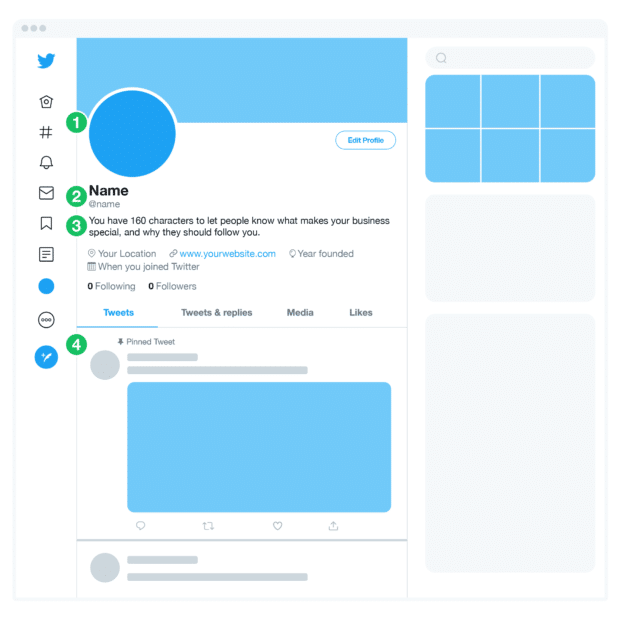
Your Twitter profile is made up of several key components.
Your handle, or username, is the name you use to log in and what people will see when they search for you on the platform.
Choosing a handle that reflects your brand identity is important and makes it easy for people to find you.
Your display name is what appears next to your tweets and retweets. This can differ from your handle but should still reflect who you are as a business or individual.
The profile picture should be an image that best represents your brand or yourself; this could be a logo, headshot, mascot, etc.
The header image gives visitors more information about who you are – it includes contact details, a company mission statement, or something visually appealing that ties into your branding.
Your bio section allows 140 characters (or less) to explain who you are and why someone should follow you – think of it like an elevator pitch!
Use keywords here so potential followers know exactly what content they can expect from following your account.
Pinning a tweet means making sure one particular post remains at the top of your timeline regardless of how many new tweets appear after it has been posted – this could be used for promotions, special offers, events, etc., so make sure whatever tweet gets pinned is relevant and timely!
Pinning also helps ensure any important messages get noticed in all the other noise on Twitter.
Tools to Manage Your Twitter Account
Twitter is a powerful tool for connecting with people and staying updated on the latest news. But managing your account can be a challenge, especially if you have multiple accounts or are trying to keep track of conversations.
Fortunately, several third-party tools can help make managing your Twitter easier.
TweetDeck
TweetDeck is one of the most popular options out there. Twitter owns it, and it’s free to use, so you don’t have to worry about additional costs.
TweetDeck has an intuitive user interface with customizable columns where you can organize lists, notifications, and feeds from different accounts all in one place.
You can also track hashtags in separate columns and schedule tweets in advance – something impossible on the regular Twitter website or mobile apps.
Plus, you can add multiple accounts so you can manage them all at once without switching back and forth between them manually.
Hootsuite
Another great option is Hootsuite which lets you manage other social media platforms besides Twitter, such as Facebook and Instagram, and schedule posts ahead of time so they go live when it’s convenient for you rather than remembering every day or hour when each post should go out.
Hootsuite uses tabs for each profile connected, making it slightly less sleek than TweetDeck but still offering similar features like tracking replies, responding quickly to messages tweets & automating account management.
The basic version of Hootsuite is free, but if needed pro version costs $9 per month.
Overall, these tools offer great ways for users who need more control over their Twitter account, allowing them to easily monitor & respond quickly while saving time & effort.
Why use Twitter for business?
There are numerous reasons to include Twitter in your organization’s social media strategy in an increasingly crowded social media landscape.
Twitter advertising is especially appealing because the platform punches above its weight in terms of reach. The total number of people who use Twitter monthly is nearly three times that of registered users.
This means that when you tweet, you reach out to more than just Twitter users. You’re also reaching out to a larger audience of non-members who read Twitter.
How to Set Up a Business Twitter Account?
Setting up a Twitter business account is easier than you think. All it takes is a few simple steps, and you’ll be ready to start tweeting in no time!
Step 1: Create An Account
First, create an account. You can do this by going to the Twitter homepage and clicking “Sign Up” at the top right.
Enter your name, email address, and password into the appropriate fields. Once that’s done, click “Create Account,” and you’re ready!
Step 2: Verify Your Account
This will help ensure that other users know they are interacting with a legitimate business or organization on Twitter. To do this, click the link sent to your email address after signing up for an account.
Step 3: Complete Your Profile
After verifying your email address, you can access all of Twitter’s features – including adding profile pictures and customizing settings like language preferences or notifications – and interact with other users on the platform.
Finally, complete your profile by adding some basic information about yourself or your company, such as location (city-state), website URL (if applicable), bio description (140 characters max), and profile picture (optional).
This will help others find out more about who they are engaging with when they come across tweets from your business account – so make sure it accurately reflects what kind of brand business you represent!
Once these three steps have been completed successfully – congratulations! You now have a fully functional business Twitter account that can be used for marketing purposes or to stay connected with customers and clients in real-time conversations.
Using Twitter for Your Business
Twitter is an incredibly powerful tool for businesses. It can reach a wide audience, engage with customers and influencers, and advertise products or services.
Here are some tips on how to use Twitter effectively for your business:
Use Hashtags
Hashtags are an effective way for businesses to get noticed on Twitter. They can join conversations, promote products and services, and create a unique identity for your brand. Brands that consistently use hashtags get 50% more engagement!
Here’s how you can use hashtags to make the most of your Twitter presence:
Choose Relevant Hashtags:
This will help ensure that people searching those terms find your content.
For example, if you own a restaurant in Los Angeles, using the hashtag #LosAngelesRestaurants would be beneficial as it is specific and targeted toward potential customers.
Create Your Hashtag:
Creating a unique hashtag for your business is another great way to stand out from the crowd on Twitter.
It helps build brand recognition and encourages users to share their experiences with others by tagging them with this hashtag.
For instance, if you own a clothing store called “Fashionista Boutique,” creating something like #FashionistaBoutique could work well as it’s easy to remember and catchy!
Use Trending Hashtags:
Utilizing trending hashtags is also an excellent way of getting more eyes on your content, as they tend to have higher visibility than other tags due to their popularity at any given time.
However, when using these types of tags, make sure they are still relevant so that people searching them see what you have posted about instead of random posts about unrelated topics!
Monitor Your Tags:
Last but not least – monitoring how well each tag performs should also be part of any successful hashtag strategy!
Keeping track of which generates more engagement (likes, retweets) versus which ones don’t can help inform future decisions regarding what type of content should be shared under certain tags or even whether certain tags need replacing altogether!
Handle Problems Through Direct Messages
If someone has an issue with one of your products or services, direct messages (DMs) can be the best way to handle it quickly and efficiently without broadcasting the problem publicly on Twitter.
You can also use DMs as a customer service tool by responding promptly when customers have questions or need assistance with something related to your business.
Use Photos, GIFs, And Polls
Try posting images related to whatever topic you’re discussing to draw more eyes towards it – this could be anything from screenshots of new features being released by your company to funny memes related but still relevant enough that viewers would want to click on it out of curiosity!
Additionally, polls allow companies to measure their customer’s opinions and give insight into trends within certain demographics, which may lead to better decision-making down the line!
According to Twitter, video increases engagement by 33%, and GIFs increase engagement by 55%. To increase your chances of appealing to your users, send your tweets with a visual. According to Buffer, images triple the rate of retweets and nearly double the rate of likes.
Do Live Tweets
Live tweeting events is another great way of getting noticed on Twitter – whether it’s industry-related conferences or local happenings in your area – live tweeting allows you to share updates with followers in real-time while providing valuable information about what’s going on around town!
Plus, since most people don’t have access to these events unless they attend themselves, seeing snippets via social media gives them a sense of FOMO (fear missing out), which encourages engagement & interaction between both parties involved!
Host And Participate In Twitter Chats
Creating & hosting conversations around specific topics relating directly and indirectly to your brand gives off the impression that you not only know what you are talking about but also show leadership qualities within the field, which then makes potential customers feel secure, trusting product service offered due having authority figure leading charge who knows ins outs industry inside out like back pocket!
Interact With Influencers and Customers
Interacting with influencers and customers is essential to any successful digital marketing strategy. It can help you build relationships, gain exposure, and increase brand loyalty.
Here are some tips to help you effectively engage with influencers and customers on Twitter:
Knowing your potential customer’s interests, values, and needs will make it easier for you to find relevant influencers to connect with.
This includes individual users and companies or organizations related to the topics that interest them most.
You should also look for industry leaders to understand better what content resonates best with their followers.
Doing this regularly will show that you appreciate their work and create opportunities for collaboration down the line when they need assistance from someone in your field.
Be sure not to keep conversations short and sweet, provide helpful advice whenever possible, and avoid being too salesy. Otherwise, people may view it as spammy behavior, which does nothing positive for either party involved.
This way, you’ll be able to stay up-to-date on customer feedback while getting a better idea of what type of content resonates best within certain circles.
Plus, it gives businesses an opportunity to address any issues before they become bigger problems later down the road!
Advertise on Twitter
Advertising on Twitter is an effective way to reach a large audience and build your brand.
Promoted Tweets are one of the most popular forms of advertising on Twitter, as they look just like regular tweets but are labeled “promoted” at the bottom.
These ads appear in the regular feeds of users who may still need to follow you, giving you more exposure and increasing your chances of gaining new followers.
Promoted Accounts are another great way to get noticed on Twitter. They help brands become more discoverable by appearing in multiple locations, such as the “who to follow” box on a user’s homepage, their home feed, and search results.
This ad can give your account a boost if used correctly.
Promoted Trends allow you to target all users during their promotion period with ads that appear at the top of trending topics lists in the trends box on Twitter.
While these ads stand out from other trending topics due to being labeled “promoted,” they still provide users with an opportunity for interaction – just like any other trend would do!
Overall, using promoted content through Twitter Ads is a great way for businesses or individuals looking to increase visibility and gain followers quickly without relying solely on organic growth methods such as engaging content or influencer marketing campaigns.
Verified Accounts on Twitter
The blue checkmark verifies to users that an account is authentic and belongs to a brand or public figure.
This verification process was suspended in 2017 but has been reinstated as of December 2020.
The purpose of verified accounts’ purpose is to assure users that they are interacting with the real deal, not a fake account or imposter.
Verification also helps protect brands from impersonation by malicious actors who may try to use their name for nefarious purposes, such as phishing scams or spreading false information.
To become verified, Twitter requires applicants to submit proof that they are who they say they are and have some influence in their field – whether it’s through media coverage, awards won, speaking engagements attended, etc.
Once approved, these accounts will be marked with a blue badge next to their profile picture so other users can easily identify them as legitimate sources of information.
Twitter has strict guidelines for verifying accounts; only those deemed “of public interest” qualify for verification status – meaning celebrities, politicians, journalists, and influencers typically cut while regular everyday people do not (unless you happen to be famous).
Additionally, any user found violating Twitter’s terms of service could lose their verification status if necessary action isn’t taken quickly enough by the offending party, including posting offensive content or engaging in abusive behavior towards other users online.
What Shouldn’t Businesses Do on Twitter?
When learning how to use Twitter for business, standard social media etiquette still applies, which means:
You want to avoid being an example of one of the many brand failures. For example, when Entenmann’s attempted to capitalize on the trending hashtag #NotGuilty, linked to a murder trial sentencing, they were forced to apologize.
Twitter Tips and Tricks to Optimize Your Profile
Your profile is like an online business card – it should give potential followers an idea of who you are and what kind of content they can expect from you.
Make sure all the information is accurate and up-to-date; include a professional headshot if possible; use keywords in your bio, so users searching for certain topics will find you more easily; link back to other social media accounts or websites as needed; and keep the overall design clean and consistent with any branding guidelines.
Twitter isn’t just about broadcasting messages – it’s also about connecting with others meaningfully.
Reply to tweets that interest you, retweet posts from influencers in your industry, follow relevant accounts related to your interests or profession, participate in Twitter chats (using #hashtags), share interesting articles or resources with others…the list goes on!
The key here is being genuine – don’t just do these things to gain followers but because it adds value for everyone involved.
It may seem counterintuitive initially, but scheduling tweets ahead of time can help increase engagement since most people are inactive 247 on Twitter anyway!
This allows you to plan out content strategically instead of having random spurts throughout the day, which could make some users feel overwhelmed by too much information coming at them all at once.
You can also take advantage of peak times when more people are likely online, such as during lunch hours or after work hours, depending on where most of your audience lives geographically speaking.
Conclusion
In conclusion, when used correctly, X, previously known as Twitter can be a powerful tool for businesses. With the right strategies in place, such as targeted ads, crafting engaging tweets, growing your following, and analyzing performance data, you can maximize your reach on this platform.
Hashtags and automation are great for optimizing multiple accounts simultaneously. Finally, integrating with other platforms effectively amplifies content across different channels – all key elements for successful Twitter marketing.
Take your digital marketing, SEO, and technology strategies to the next level with The Wall Blog. Our expert-level advice on Twitter will help you maximize engagement and reach new heights of success.

Youssef Hodaigui
Youssef Hodaigui is an entrepreneur, blogger and SEO expert with a strong track record of success in launching and growing blogs and websites. He has a deep understanding of search engine algorithms and the latest digital marketing techniques, and he is committed to helping bloggers and entrepreneurs achieve their online business goals.